Complete Bat Damage Repair & Attic Restoration in Sioux Falls, SD
Bats Leave More Than Just Droppings Behind
Most homeowners focus on getting the bats out. That is the right first step. But once the colony is gone the damage they left behind does not fix itself. Insulation saturated with guano and urine loses all insulating value. Wood surfaces stain and deteriorate. The ammonia smell soaks into materials and gets worse every summer. Left untreated that damage compounds year after year.
Bat damage repair is the final step in a complete solution. As part of our full bat removal Sioux Falls we handle everything after the exclusion is done insulation replacement, structural repair, odor elimination and full attic restoration. You do not need to hire three different contractors to clean up after a bat colony. We handle it all under one roof.
What Kind of Damage Do Bats Actually Cause?
The extent of bat damage in a Sioux Falls home depends on two things — the size of the colony and how long they stayed. Here is what we typically find when we get into an attic after a bat colony has been removed.
- Insulation Damage: This is the most common and most expensive damage we see. Bat guano and urine saturate blown-in and batt insulation quickly. Once contaminated that insulation is worthless. It holds no thermal value, it harbors histoplasmosis spores and it holds the ammonia smell permanently. It has to come out completely before any restoration can happen.
- Wood Staining and Deterioration: Urine soaks into roof decking, joists and rafters over time. The moisture from a large colony causes wood to stain dark, soften and in severe cases begin to deteriorate structurally. We assess every inch of exposed wood in the attic and treat or replace anything the colony damaged.
- Odor Penetration: Ammonia from bat urine is one of the most persistent odors in a home. It gets into porous surfaces insulation, wood, drywall and stays there long after the bats are gone. Summer heat pushes it down into living spaces and it gets worse every year if the source is not eliminated.
- Guano Accumulation: A colony of 50 bats produces a significant pile of droppings in a single season. A colony of 200 bats over three seasons produces a volume of guano that can physically compress and damage the structure below it. We have seen attic floors completely covered in accumulation that took years to build up.
- Secondary Pest Activity: Bat guano attracts secondary pests including certain beetle species that feed on the droppings. A long term bat infestation can introduce a secondary pest problem that needs attention alongside the bat damage restoration.
Our Bat Damage Repair Process
Every restoration job starts with a thorough assessment and ends with a complete written sign-off. Here is how we work through the process on Sioux Falls homes.
Full Attic Assessment and Documentation: Before any work begins we do a complete attic assessment. We document the extent of guano accumulation, insulation damage, wood staining and any structural concerns we find. You get a full written report and itemized quote before a single piece of material gets removed. No surprises. No scope creep. Everything is agreed on in writing before we start.
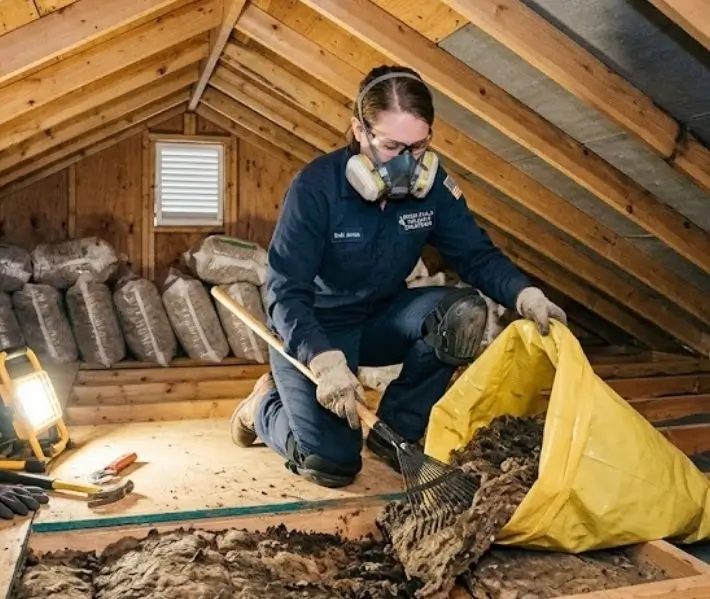
Safe Guano Removal: Our technicians work in full protective equipment. We remove all guano deposits carefully using commercial grade vacuum equipment with HEPA filtration to prevent spores from becoming airborne inside your home. This step has to be done right — rushing guano removal creates a health hazard.
Contaminated Insulation Removal: Every section of contaminated insulation comes out. We bag it, seal it and dispose of it properly. We do not leave any compromised material behind because even a small amount of contaminated insulation left in place will continue to harbor histoplasmosis spores and hold the ammonia odor.
Structural Treatment and Repair: Once the attic is clear we treat all stained and affected wood surfaces with an enzyme based biological cleaner that breaks down the urine compounds and eliminates the odor source at the wood level. Any wood that shows signs of structural compromise gets assessed and repaired or replaced as needed.
Full Sanitization: We apply a commercial grade sanitizer to every surface in the affected attic space. This eliminates biological contamination and neutralizes any remaining spore activity. The attic needs to be completely clean before new insulation goes in.
Odor Elimination: After sanitization we apply an odor neutralizer specifically formulated for ammonia based biological odors. By the time we are done your attic should have no detectable bat odor. If it does we come back and address it.
New Insulation Installation: We install fresh clean insulation to restore your attic to proper thermal performance. We match the insulation type and R-value to your home’s requirements and South Dakota’s climate demands. A properly insulated attic after a bat damage restoration should perform better than it did before the bats moved in.
Final Walkthrough and Sign-Off: We walk through the completed job with you before we leave. You see the finished attic, we confirm everything meets our standard and you get a written sign-off on the completed work.
How Bad Is the Damage in Your Attic?
The honest answer is you probably do not know until someone gets up there and looks. Most homeowners are surprised by what a bat colony leaves behind — especially when the infestation went undetected for more than one season.
Here is a rough guide based on what we typically find in Sioux Falls homes.
One season with a small colony — Light guano accumulation, insulation may be partially salvageable in sections away from the roost area, minimal wood staining, odor present but manageable.
One to two seasons with a medium colony — Moderate to heavy guano accumulation around the roost area, insulation needs full or near full replacement, noticeable wood staining, strong ammonia odor present in attic and possibly detectable in upper floors.
Two or more seasons with a large colony — Heavy accumulation throughout the attic, full insulation replacement required, significant wood staining, possible structural concerns in heavily affected areas, odor pushing into living spaces, secondary pest activity possible.
Our free bat inspection in Sioux Falls tells you exactly which category your home falls into before any work begins.
Why You Should Not Leave Bat Damage Unaddressed
A lot of homeowners get the bats removed and stop there. The attic smells a bit. The insulation looks rough. But nothing is visibly falling apart so they put the restoration on the back burner.
Here is what happens when you do that.
The histoplasmosis spores in the guano stay active for years. Every time someone goes into the attic to check the HVAC unit, to retrieve stored items, to do any kind of maintenance they disturb dry droppings and breathe in spores. Over time that is a serious health risk.
The ammonia odor gets worse every summer as the attic heats up. What starts as a faint smell in the attic eventually pushes through ceilings and into the living space below. By that point the source material has had more time to penetrate deeper into wood surfaces and the odor elimination job gets significantly harder and more expensive.
The compromised insulation costs you money on every energy bill. Saturated insulation has no thermal value. Your HVAC system works harder every season to compensate for an attic that is not performing the way it should.
The right time to address bat damage is immediately after the exclusion is complete. The longer you wait the worse each of these problems gets.
Bat Damage Repair Sioux Falls — Common Questions

Ready to Restore Your Attic to Normal?
Getting the bats out is the first step. Restoring your home is how you finish the job. If your attic has guano buildup, damaged insulation, wood staining or a persistent ammonia smell do not leave it sitting there getting worse.
Call us now. The inspection is free. We will get up in your attic, show you exactly what the colony left behind and give you a straight honest quote for the full restoration. We answer 24 hours a day and can usually schedule your assessment within the same week you call.